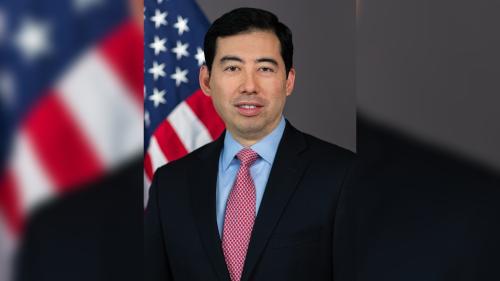
As City & Financial Global’s City Week 2026 opened in London today, one theme quickly emerged from discussions around financial reform and digital assets: that the US regulatory shift is less about dismantling rules and more about redesigning them for a new financial era.
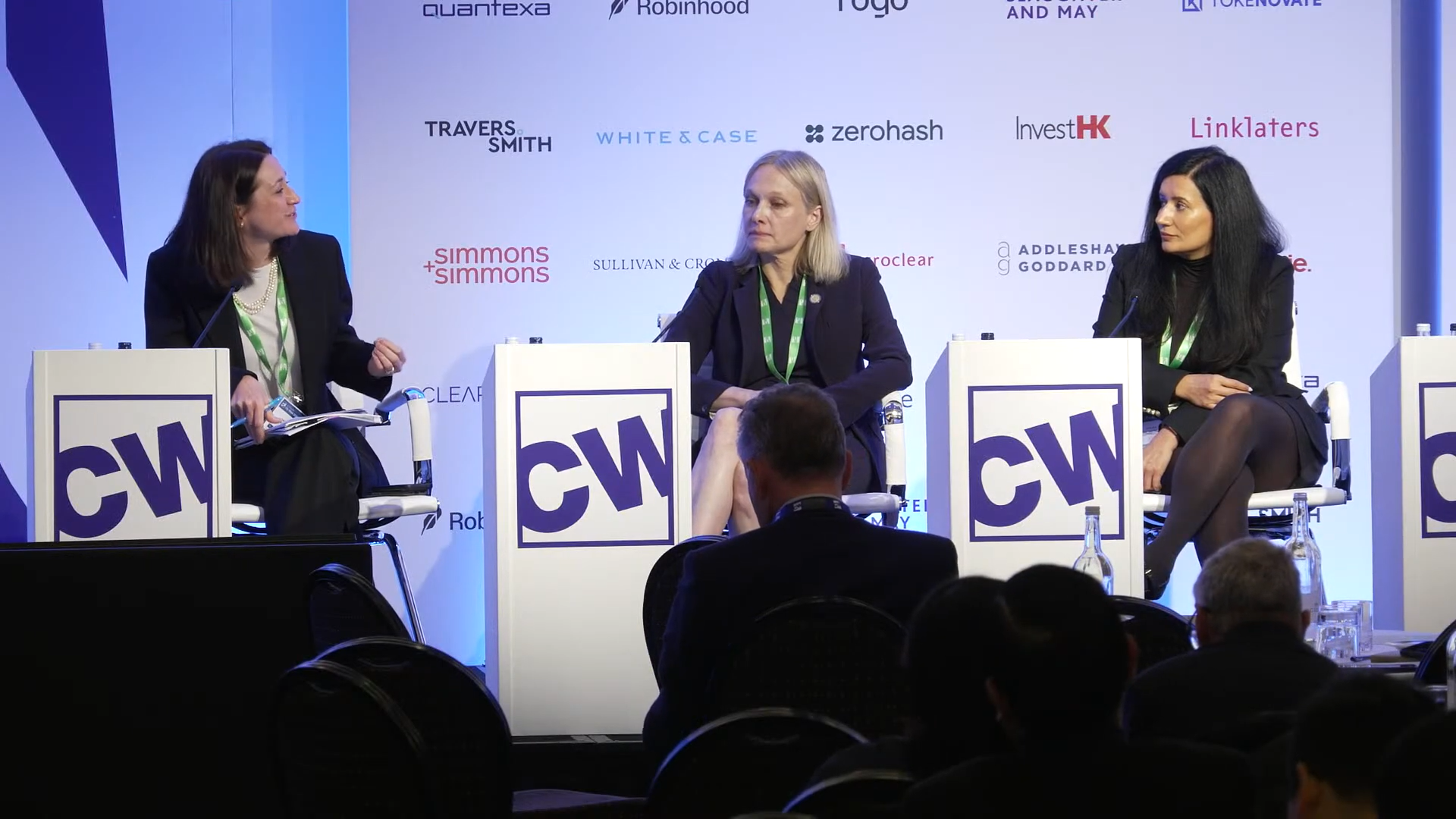
During a panel titled The US regulatory reset: implications for global financial services, speakers from the SEC, the New York Department of Financial Services (NYDFS) and the Commodity Futures Trading Commission (CFTC) argued that regulators are increasingly focused on modernization, cross-border cooperation and enabling innovation rather than pursuing wholesale deregulation.
Moderated by Sarah Lewis, partner at Cleary Gottlieb Steen & Hamilton LLP, the session explored how evolving US policy is shaping global financial markets, particularly in crypto, tokenization and blockchain infrastructure.
According to Lewis, the central issue is that regulatory changes in the US inevitably extend beyond its borders.
‘The regulatory environment does have ripple effects to the rest of the world, given the fact that we have cross-border companies, cross-border banks and financial services that are not confined within borders,’ she said.
Modernizing regulation, not removing it
For SEC commissioner Hester Peirce, the current moment is fundamentally about reassessing whether legacy regulatory frameworks remain fit for purpose.
‘The project going on in the US is one of trying to take a look at the rulebook and make sure it’s working as it should in light of new technologies and market practices,’ Peirce said.
She rejected the idea that the US was abandoning oversight, arguing instead that regulators have an obligation to continually revisit rules as markets evolve.
‘If you want to characterize that as deregulation or smart regulation, I don’t think it really matters,’ she added.
That sentiment was echoed by Sumeera Younis, who pushed back strongly against what she described as a misleading narrative around deregulation.
‘I think this deregulatory narrative is kind of dishonest,’ Younis said. ‘It’s usually a really weighted term that connotes that suddenly the rule of law is not a priority and that industry is the one running the show.’
Instead, she argued that agencies are reprioritizing resources toward creating clearer frameworks for crypto firms and blockchain technologies.
‘That’s not necessarily moving away from regulation,’ Younis said. ‘It’s just focusing in a different place.’
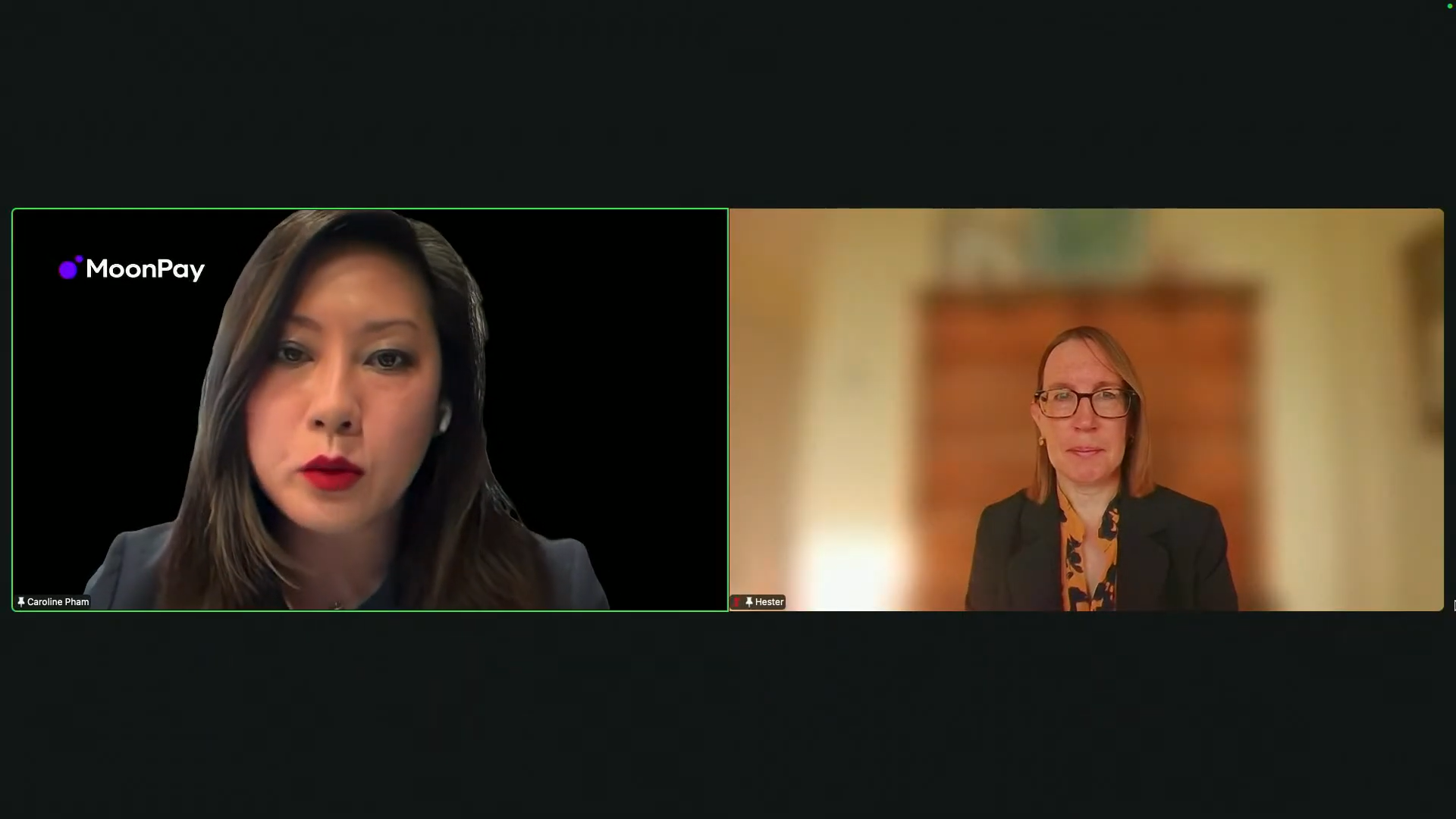
For Caroline Pham, the shift mirrors previous technological transitions that transformed financial infrastructure.
Pham compared blockchain adoption to the move from paper-based records to electronic trading systems, a process that required years of regulatory modernization across US agencies.
‘Now we’re seeing almost a leapfrog effect by being able to go to blockchain technology to modernize financial rails,’ she said.
Pham argued that despite the political rhetoric, regulatory activity in the US remains intense across banking regulators, the SEC and the CFTC.
‘I would call it smart regulation,’ she said. ‘It’s tailoring. It’s realizing that we have to modernize regulations in order to keep up with the fact that the technology is changing.’
Cross-border cooperation moves to the front
Cross-border coordination was another dominant theme throughout the discussion, particularly as digital assets increasingly operate beyond traditional jurisdictional boundaries.
Peirce said crypto regulation presents regulators with an opportunity to build international frameworks collaboratively rather than retrofitting fragmented systems later.
‘We should try to figure out ways to make it easier for firms to operate cross-border by saying: if you’re complying with local rules, we’re fine with that,’ she said.
She also suggested regulators should explore international regulatory sandboxes that would allow firms to test products simultaneously in multiple jurisdictions.
Younis described the current period as a ‘really unique position’ for regulators and industry alike because the foundational regulatory architecture for digital assets is still being built.
‘We have an opportunity to make those rails as seamless as possible,’ she said.
At the state level, Carla Carriveau emphasized the importance of international cooperation, particularly between New York and the UK.
‘The two cities are centers of global financial services,’ Carriveau said. ‘It’s so important that we are talking to each other and sharing information and talking about what solutions might be compatible, if not identical.’
Carriveau pointed to NYDFS’s secondment program with the Bank of England and the subsequent creation of its Office of International Affairs as evidence of growing regulatory collaboration.
She also defended the role of state regulators in the US system, particularly in fast-moving areas such as digital assets.
‘I think the [US is] able to be very nimble in how we think about the evolution of technology, and that’s really needed, especially with DLT,’ she said.
The panel also addressed long-running questions over regulatory overlap between federal and state agencies and among federal regulators themselves.
Younis dismissed suggestions of competition between agencies overseeing crypto markets.
‘There’s no turf war, that’s for sure, and we’re working very closely,’ she said.
Peirce similarly stressed that coordination between the SEC, state regulators and other federal agencies has long been embedded in the US system.
‘We’re trying to do what’s right for the American people. We’re not trying to grab turf,’ she said.
Pham argued the coexistence of federal and state oversight should be viewed as a strength rather than a weakness.
‘That coexistence between state and federal regulation is a feature, not a bug, of our system,’ she said.
She credited New York’s early crypto frameworks with helping establish supervisory models later adopted more broadly across the industry.
Why regulators say innovation still matters
Beyond regulation itself, speakers repeatedly returned to the role regulators should play in supporting innovation.
Peirce cautioned that innovation should remain market-driven rather than directed by government.
‘It shouldn’t be driven by regulators or regulation,’ she said.
However, she acknowledged regulators must avoid creating environments that discourage legitimate technological development.
Younis went further, arguing regulators should actively avoid becoming barriers to experimentation.
‘We should celebrate permissionless innovation,’ she said, while emphasizing that innovation still requires appropriate guardrails.
Carriveau framed the relationship between innovators and regulators as a two-way learning process.
‘Regulators need to not be scared of technology first,’ she said. ‘On the other side, I think innovators can also learn from regulators about risk management.’
Pham concluded by highlighting the accelerating institutional adoption of blockchain technology across financial markets.
‘Tokenization is very much real. It is here today,’ she said.
She cited stablecoin volumes and tokenized repo activity as evidence that blockchain infrastructure is already being integrated into mainstream financial systems at scale.
For regulators on both sides of the Atlantic, the challenge now is ensuring frameworks evolve quickly enough to accommodate that transformation without sacrificing market integrity or investor protection.

Natalie Bannerman
Natalie is a former telecoms and infrastructure journalist, a role she held for nearly seven years. Before this, she worked in the B2C startup space, covering lifestyle, arts and culture reporting. As senior reporter for Governance Intelligence she...