Set against a backdrop of balmy heat, cowboy boots and country music in Nashville, SEC chairman Paul Atkins used his keynote address at the Society for Corporate Governance's 2026 National Conference to deliver a clear message to governance professionals: responsibility ultimately rests with corporate leaders.
Atkins opened by outlining his broader philosophy for government and regulation.
'Government must be limited; its purpose is to set the conditions for prosperity, not engineer it,' he said.
That principle underpins what he described as one of his main objectives since taking over as SEC chairman.
'One of my top priorities as chairman is to restore the [public company disclosure] regime to one rooted in materiality,' Atkins said.
He argued that disclosure requirements have expanded well beyond their intended purpose.
'Regulation S-K has become a grab bag of disclosure requirements untethered from materiality. We need to return it to its proper purpose: providing investors with decision-useful information,' he said.
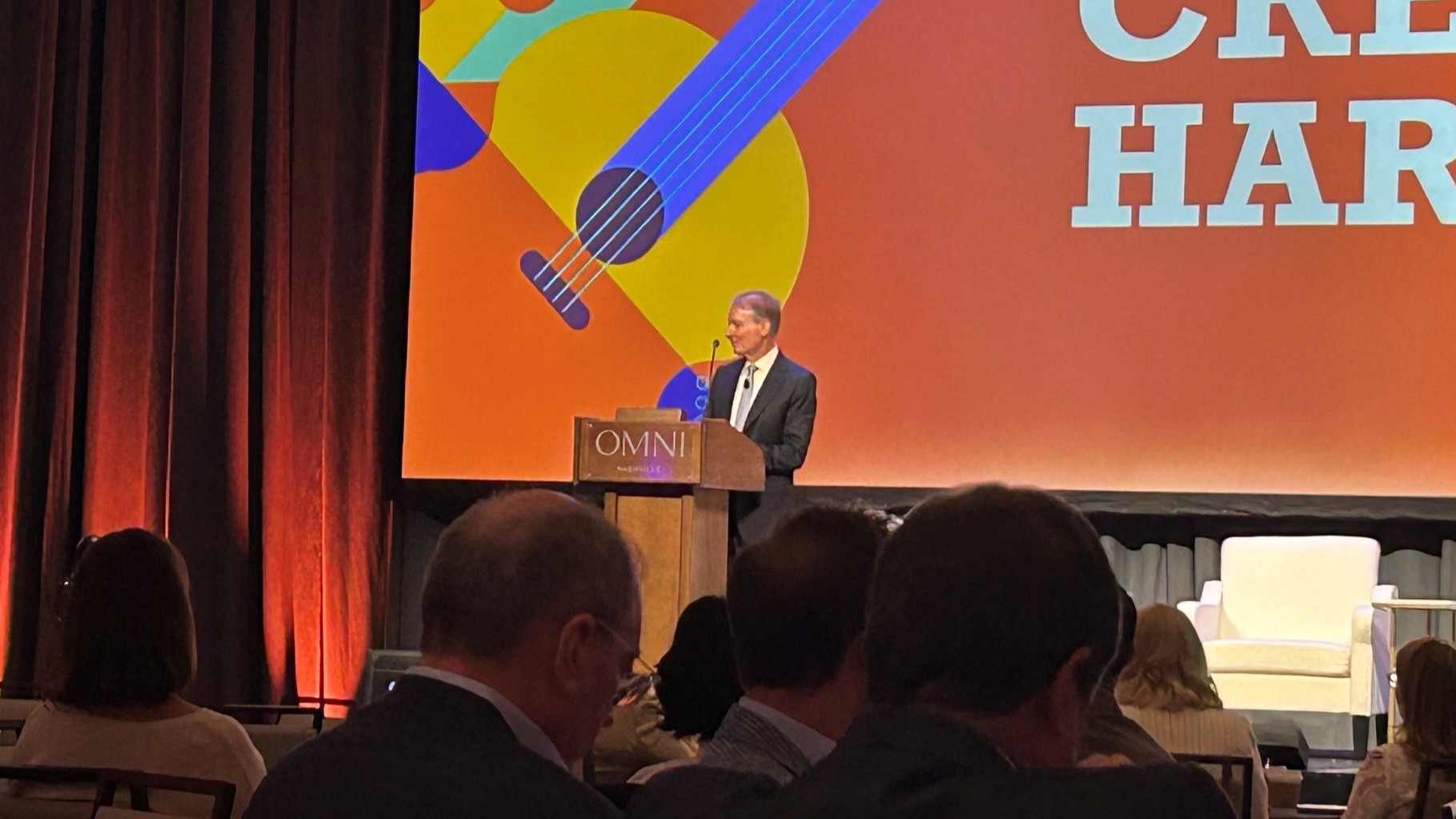
Warning against increasing reporting obligations, Atkins added: 'A disclosure death spiral benefits neither companies nor their shareholders.'
Throughout his speech, Atkins encouraged governance professionals to engage directly with the regulator as it develops policy.
'We need your engagement. It's a two-way street, so don't be afraid to come in and talk to us,' he said.
He described the commission's priorities as 'ACT agendas: advance, clarify and transform,' adding that the SEC wants 'to get rules out in a thoughtful way, efficiently take in and consider comments, and have a first-class analysis from an economic perspective.'
A recurring theme was ensuring regulation supports US capital markets rather than discouraging participation.
'We're focused on renewing regulatory policy to support innovation, capital formation, market efficiency and investor protection. We've seen too much of how innovation was chased offshore. We need to embrace it,' Atkins said.
He also reflected on how capital raising has changed over recent decades.
'The difference between then and now is that back then a public offering IPO, a big one, would be what's now a Series B or C offering in the private market. Now, it's almost an exit strategy.'
On shareholder proposals, Atkins argued that fears surrounding changes to the SEC's approach had not been come to fruition.
'Nearly eight months later, it's clear that neither of these dire predictions materialized and I'm happy to report the world did not end simply because the commission staff stopped responding to no-action requests,' he said.
He added that, 'Despite the heightened drama of the 2026 shareholder proposal season, the year-on-year trends remained largely consistent with the prior year.'
Atkins also suggested greater competition among states could benefit companies and investors.
'Give tools to the corporate community and shareholders to be able to try things. As states are moving to compete more, have competition out there and see what shareholders like,' he said.
He continued: 'As states are moving to compete more, have competition out there and see what shareholders like. We will be able to go with the flow and figure that out and I think that's important for the system.'
At the same time, he cautioned states against allowing politics to influence corporate governance.
'I also call on states that are competing to become or remain the leading destinations for corporate domestication to ensure that their corporate laws do not enable the politicization of shareholder meetings.'
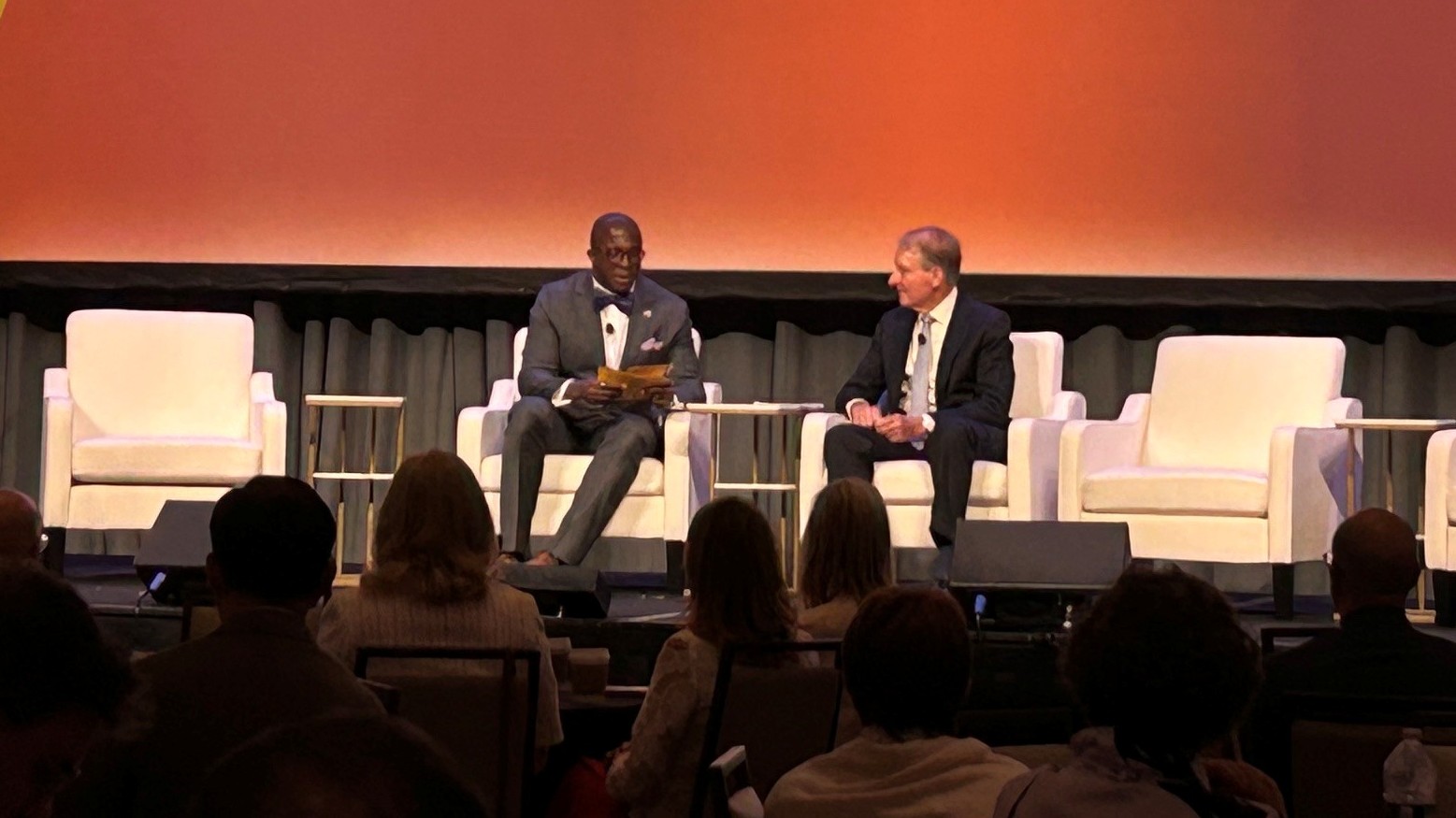
AI was another major focus of the address, with Atkins describing the technology as an opportunity rather than a threat, provided accountability remains clear.
'The SEC should not dictate which models are permissible or not. Americans need to resist the temptation to overreact out of fear of the future. Ultimately, regardless of the tool, the issuer remains responsible for the information it puts out,' he said.
He added that AI is 'a great tool to make your job easier, more efficient and ultimately more accurate. It's the government's responsibility to ensure the communication guardrails for investor protection are there, and beyond that, to let the market flourish and innovation fly.'
Addressing governance professionals directly, Atkins said: 'AI can help make annual meetings and shareholder engagement more efficient and accessible, but issuers remain responsible for the information they put out and the guardrails for investor protection.'
That emphasis on accountability led to perhaps the most memorable line of the keynote.
'The buck stops with you,' Atkins told attendees, referring to the responsibility companies must bare for the volume, clarity and substance of information in their filings.
The Nashville setting also provided one of the session's lighter moments. During the audience Q&A, one attendee drew on the city's musical heritage, asking: 'For nearly a century, the SEC has operated somewhat like a Nashville session musician, playing its part with a degree of independence, regardless of who was headlining the show. Following the Supreme Court's decision in Slaughter, do you view the SEC as remaining that independent player, or does the decision signal a change in tune?'
Atkins responded by returning to a theme that had run throughout his keynote: stability, predictability and the rule of law.
'We are still a rule-of-law society and that needs to prevail ultimately. If we can get our rules done, have them tested and have predictability for people, that's what should prevail, and not politicization or ping-ponging back and forth.'
–
The Society for Corporate Governance 2027 National Conference will be held from July 6 to 9, 2027, at the Marriott Marquis San Diego Marina in San Diego, California.

Natalie Bannerman
Natalie is a former telecoms and infrastructure journalist, a role she held for nearly seven years. Before this, she worked in the B2C startup space, covering lifestyle, arts and culture reporting. As senior reporter for Governance Intelligence she...